Give Your Atlanta Yard a Richer After-Dark Look
Layered outdoor lighting gives your yard more than basic visibility after sunset. It adds depth, draws attention to the features you enjoy most, and helps entries, patios, walkways, and garden areas feel warm and welcoming. Instead of seeing one bright spot surrounded by darkness, you see a balanced view of the whole property.
A single strong fixture can make an outdoor area look flat. With several light levels placed at different distances, we can create contrast in the foreground, middle areas, and background. Metro Atlanta homes often have mature trees, sloped lots, stone details, planting beds, and covered gathering spaces that benefit from this approach. The goal is not to make every inch bright. It is to create a natural look where the light supports the view without becoming the main thing you notice.
Start with a Lighting Plan That Fits the Property
Every home calls for its own plan. Rather than starting with a standard fixture package, we look at how you use the property and what deserves attention after dark. Your home's style, driveway, paths, plantings, patio, deck, and front entry all shape the final design.
Focal points should come first. A welcoming entry may need more attention than a side yard you rarely use. Stone columns, a favorite tree, a retaining wall, or a fountain can also become part of the evening view. Once those key areas are identified, we can build supporting light around them.
Property size matters, too. On a smaller lot, careful aiming helps keep light comfortable around nearby homes. On a larger property, lighting can visually connect the house with outdoor gathering areas and features farther from the main structure. A custom residential outdoor lighting design works best when it follows the property's natural flow instead of treating every area the same.
Build Depth with Path, Plant, and Architectural Layers
Layered lighting is easier to understand when we break it into three jobs. Each one has a purpose, but the best results come from combining them in a thoughtful way.
- Path and step lighting guides movement near walkways, stairs, and changes in elevation.
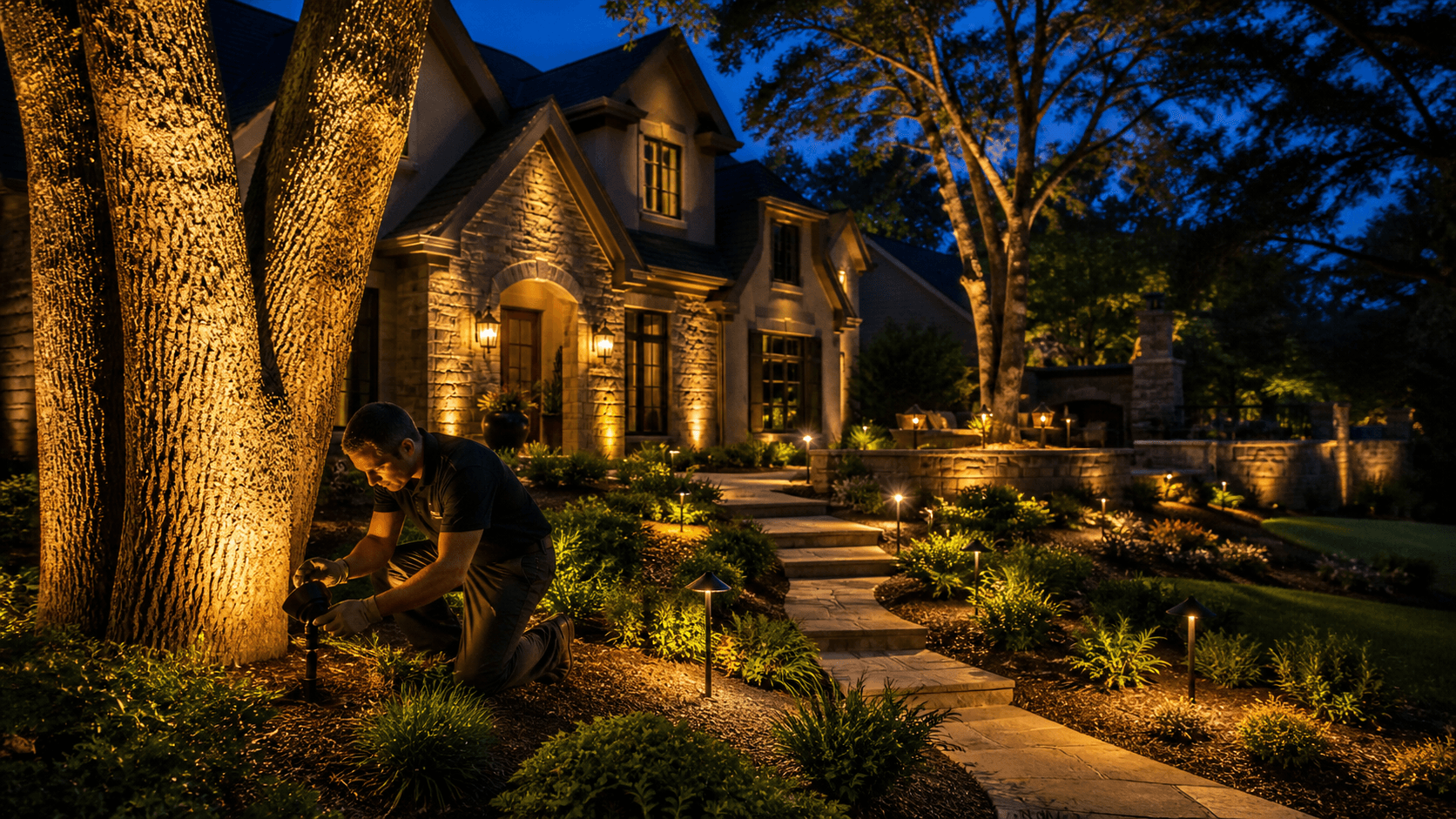
- Plant lighting brings out the shape and texture of trees, shrubs, and garden beds.
- Architectural lighting highlights details such as brick, stone, columns, rooflines, and entry features.
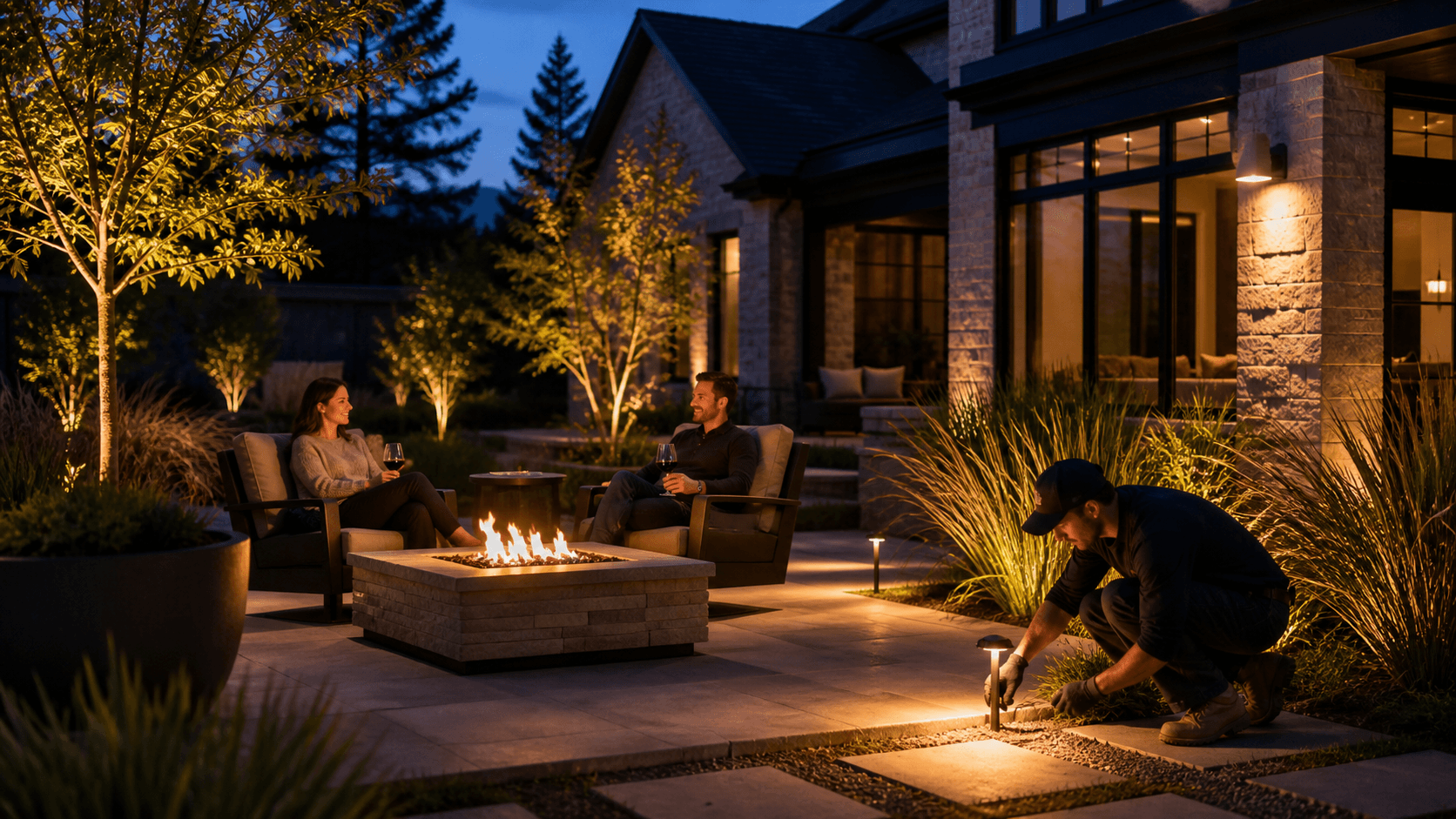
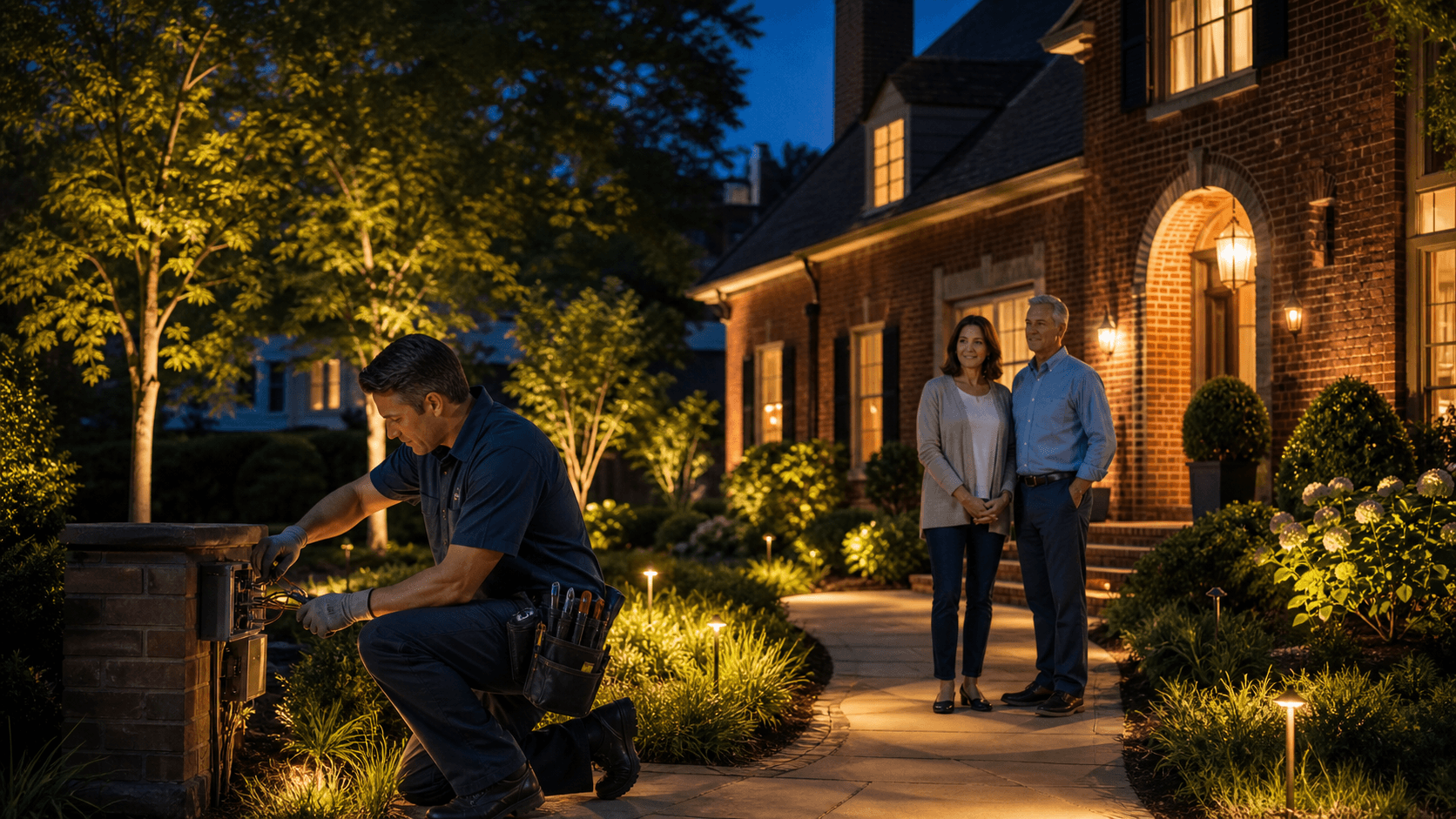
For example, soft path lights may guide guests toward the front door while a gentle wash of light brings warmth to the entry. Nearby tree lighting can create a background behind the home, so the yard does not disappear into a dark wall at night. That mix gives your eye places to travel naturally.
Balance matters as much as fixture selection. We avoid lining every walkway with identical lights, crowding too many uplights into one bed, or giving every feature equal attention. Darker spaces are part of a good design. They give the lit features room to stand out and keep the yard from feeling busy.
Balance Brightness for Comfortable Outdoor Living
Effective outdoor lighting does not mean turning the entire property into a brightly lit space. Softer, controlled light is usually more pleasant for sitting outside, sharing a meal, or spending time on a patio after dark. A comfortable design lets you see where you are going while keeping the setting calm.
Placement has a big effect on comfort. We aim fixtures carefully and use shielding where needed, so you see the result of the light instead of a harsh glare from the fixture itself. This is especially helpful around seating areas, windows, driveways, and steps.
By October, evenings arrive earlier, and many of us start noticing which parts of the yard feel hard to enjoy after sunset. Layered lighting can make outdoor dinners, fall gatherings, and seasonal decorating easier without making the property feel overlit. The same system can continue to support everyday use throughout the year.
Choose LEDs and Controls That Support Each Layer
LED fixtures are a practical choice for year-round outdoor lighting. They use less energy than older lighting options, provide consistent light, and reduce the need for frequent bulb changes. That makes it easier to maintain a polished look across pathways, plantings, and architectural features.
Light color also affects the mood. Warm white light often works well with brick, stone, wood, and traditional outdoor materials. The right tone depends on your home's finishes, the colors around it, and whether you want the setting to feel cozy, clean, or more dramatic.
Useful control options can make the system easier to enjoy:
- Timers can follow the hours you prefer.
- Photocells can turn lights on as daylight fades.
- Zoning lets separate areas operate independently.
- Smart controls can make seasonal schedule changes simpler.
With zoning, for instance, you may prefer path and entry lights for normal evenings while adding patio or tree lighting when you are entertaining. We can help match controls to the way you actually use the property.
Let a Complete Design Bring the Yard Together
A layered system looks best when it is planned as one connected design, not added fixture by fixture over time. Professional placement, wiring, aiming, repairs, and upgrades help each layer work with the next. At Brighten Up Lights, we can review an existing system or plan a new outdoor lighting design around your home, goals, and budget.
The strongest layered designs combine focused light for movement, softer light for plants and gathering areas, and accents that highlight the home's character. By leaving some areas darker and giving each layer a clear purpose, you can create depth, comfort, and a more natural after-dark view of the property.
Bring Your Atlanta Yard to Life After Dark
Brighten Up Lights can help you plan a custom residential landscape lighting design that fits your home, outdoor spaces, and routine. Our team will recommend thoughtful fixture placement and controls that make the system easy to enjoy year-round. Ready to discuss your goals and receive a professional recommendation? Contact us for a consultation and estimate.