Low-Voltage Vs. Line-Voltage Exterior Lighting
Low-voltage and line-voltage lighting can both make your home look more inviting after dark. The right system can bring attention to architectural details, create a warmer patio setting, and make walkways and planting areas easier to enjoy in the evening.
The better choice depends on your home's layout, the fixtures you want, your existing electrical setup, and how likely you are to update the yard over time. In Metro Atlanta, October's earlier sunsets make this a smart time to think about exterior lighting before cooler-weather entertaining and seasonal gatherings begin.
How Low-Voltage Architectural Exterior Lighting Works
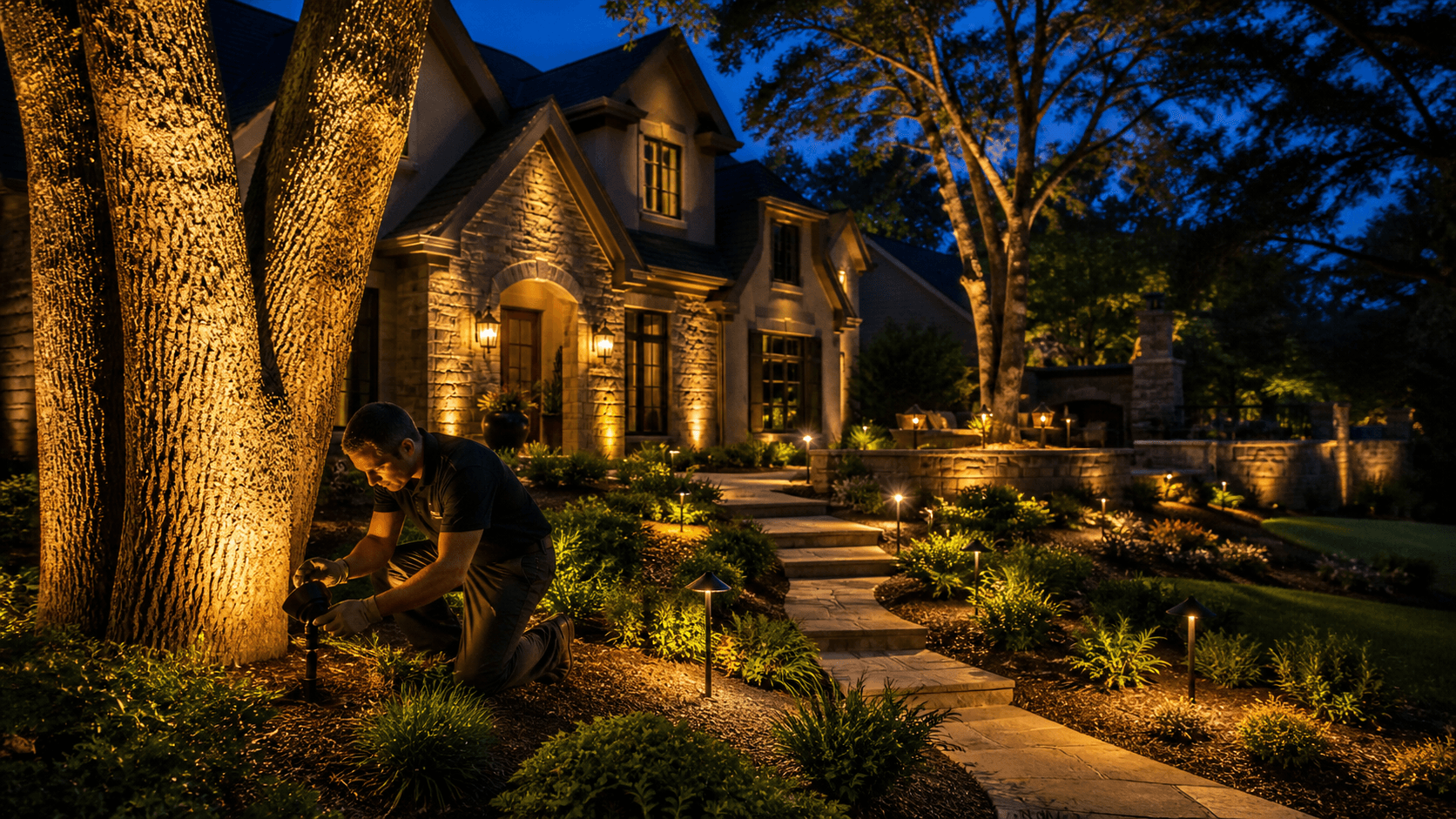
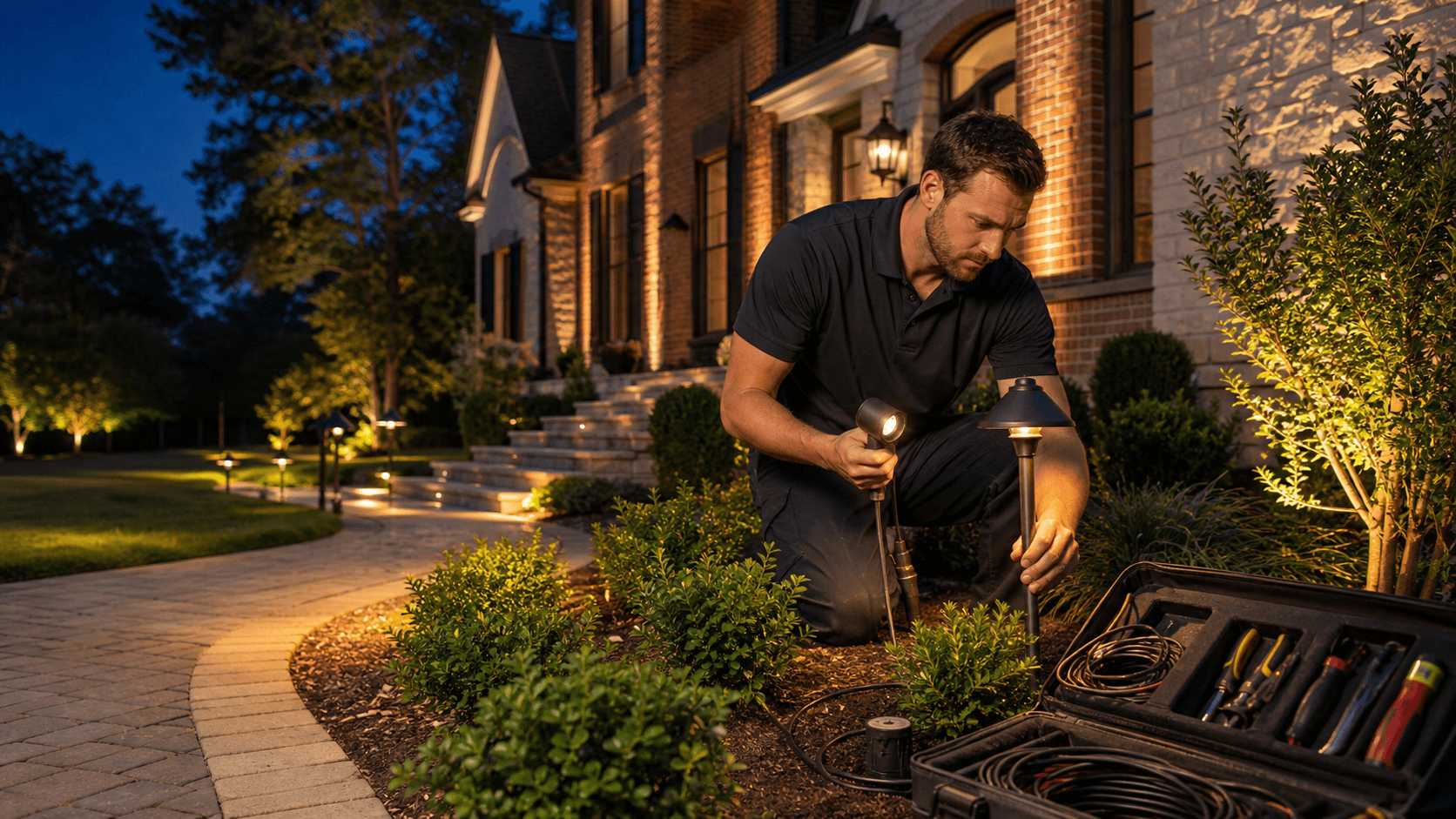
Low-voltage architectural exterior lighting starts with a transformer. The transformer lowers standard household electricity to 12 volts before power travels through cable to the outdoor fixtures. That lower voltage works well for many common exterior lighting needs, including path lights, uplights, patio accents, tree lighting, and lighting around planting beds.
One reason we often recommend low voltage for outdoor lighting is flexibility. Fixtures can be moved, added, or adjusted more easily than permanently wired fixtures. That matters when plants grow taller, trees fill in, or you decide to update a patio, stone feature, or outdoor seating area.
Atlanta homes often have layered beds, mature trees, and lots of visual depth around the property. A low-voltage system gives us room to fine-tune the lighting as those features change.
A well-planned system depends on more than placing fixtures where they look good during the day. We consider details such as:
- Transformer capacity for the number of fixtures being installed
- Proper cable sizing to help deliver consistent power
- Fixture placement that avoids glare and distracting hot spots
- Balanced voltage so LEDs shine evenly across the property
Without thoughtful planning, some fixtures may appear dimmer than others, colors may look uneven, and LEDs may wear out sooner than expected. Professional design helps the finished lighting feel connected and intentional instead of added one piece at a time.
Where Line-Voltage Lighting Makes Sense
Line-voltage lighting uses the same 120-volt power found in standard household electrical wiring. It is commonly used for larger, fixed exterior fixtures, such as certain wall sconces, carriage lights, flood fixtures, and specialty architectural pieces.
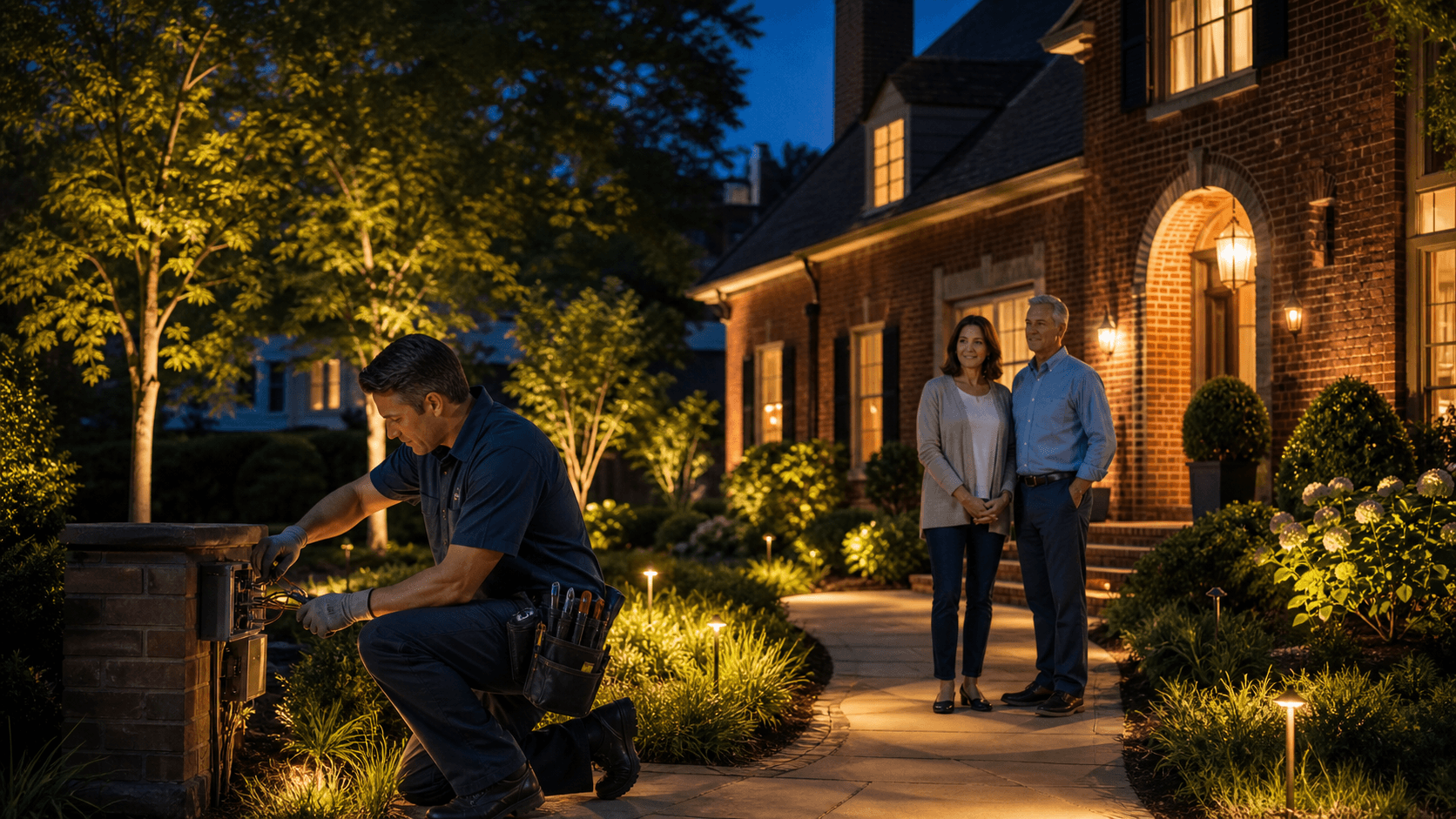
For some homes, line voltage is already part of the exterior lighting setup. Existing porch lights and wall-mounted fixtures may connect to electrical junction boxes that are built for standard household power. In those cases, keeping line-voltage fixtures in place can be practical.
Line voltage may also be considered when:
- A fixture is far from a suitable transformer location
- An exterior fixture has a higher power requirement
- Existing electrical boxes support the desired fixture
- A project calls for a fixed lighting location that will not change
LED fixtures have reduced the need for high-wattage outdoor lighting in many situations. Still, line voltage has a place when the fixture type or electrical layout calls for it.
Installation is usually more involved than with low voltage. New line-voltage work may require properly rated wiring, weather-protected connections, exterior boxes, conduit, and code-compliant electrical work. We do not recommend treating this type of project as a simple weekend task, especially if it involves new circuits or wiring near moisture.
Installation Scope, Maintenance, and Flexibility
Both systems need planning before installation begins, but they approach the property differently. Low-voltage systems use a transformer, low-voltage cable, and multiple fixtures placed throughout the yard. Line-voltage systems can require more permanent electrical routing, depending on the location of existing power and the fixtures selected.
For lighting around paths, trees, planting areas, patios, and the front of the home, low voltage often gives us more room to shape the look after installation. If a shrub grows over a fixture or a new seating area changes the flow of the backyard, adjustments are usually easier to make.
Line-voltage fixtures are often more fixed in place. That can work well for a porch sconce or a mounted fixture near an entry, where the location is not likely to change. It is less flexible for areas where planting and outdoor living spaces may evolve.
No matter which system you choose, occasional care helps keep the lighting looking its best. We recommend checking for dirty lenses, damaged connections, shifted fixtures, and control settings that no longer match your routine. Low-voltage systems still need proper voltage planning to avoid dimming over long cable runs. Line-voltage fixtures need careful protection from rain, humidity, and normal outdoor wear.
Choosing a System for Your Atlanta Home
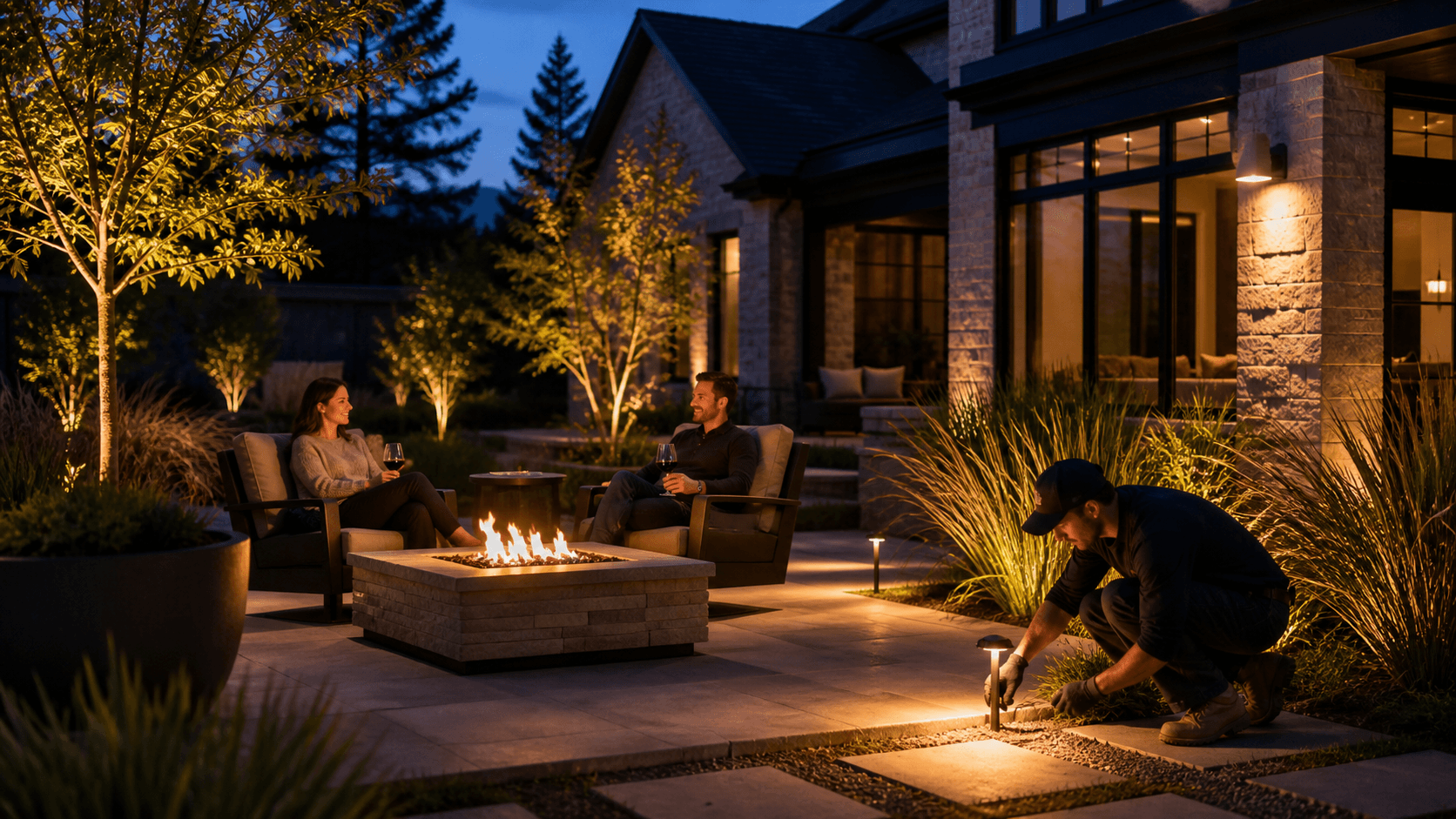
Rather than starting with voltage, begin with what you want your lighting to do. A front-entry update may call for soft pathway illumination and uplighting that brings out the home's exterior lines. A backyard project may focus more on patio ambiance, retaining walls, trees, and areas where people gather after sunset.
Many homes benefit from using both types of lighting. Existing line-voltage porch fixtures can remain in place while a low-voltage architectural exterior lighting system adds depth around the home, planting areas, and outdoor living spaces. The goal is not to force one power system everywhere. It is to match each area with the lighting approach that makes the most sense.
Local conditions should be part of the plan, too. Heavy summer rain, humidity, tree cover, changing daylight hours, and red clay all affect how an outdoor system performs. Durable fixtures, protected connections, thoughtful drainage, and carefully placed transformers help support reliable lighting through the seasons.
Low voltage is often an excellent fit for flexible, energy-efficient exterior lighting, while line voltage can serve select fixed fixtures and specialized electrical needs. A nighttime evaluation of your property can reveal which features deserve attention and where each power system will work best.
Bring Your Home's Best Features Into Focus
Brighten Up Lights can design a system that complements your home's architecture, landscaping, and outdoor living areas. Our low-voltage architectural exterior lighting installations are tailored to the features you want to highlight and the way you use your property after dark. For a professional recommendation and estimate, contact us to get started.