Give an Older Home a More Inviting Nighttime Look
Older Woodstock homes often have details worth seeing after sunset, from welcoming porches and stonework to mature trees, garden beds, and winding walkways. Yet older outdoor lighting systems can leave those features in the dark.
An LED upgrade is more than swapping out old bulbs. We can plan lighting around your home's character, making entry areas and paths easier to use while creating a comfortable setting for patios, decks, and evenings outside. Below, we'll cover signs your system may be due for attention, LED options, design choices for older properties, and why a professional plan helps avoid common problems.
Signs Your Existing Outdoor Lighting Needs an Upgrade
Flickering fixtures, lights that dim without warning, or bulbs that stop working after rain can point to more than a burned-out bulb. In older systems, we often find worn connections, aging wire, tired transformers, or fixtures that no longer hold up well outdoors.
Older halogen and incandescent systems may also produce uneven light. One area can feel far too bright while steps, walkways, planting areas, and front-entry details remain hard to see. That imbalance can make a beautiful home look flat rather than warm and welcoming.
Visible wear is another reason to take a closer look:
- Corroded fixtures or cracked lenses
- Loose connections or exposed wiring
- Fixtures that have shifted as soil settles or plants grow
- Bulbs that need frequent replacement
- Lights that no longer match how you use the property
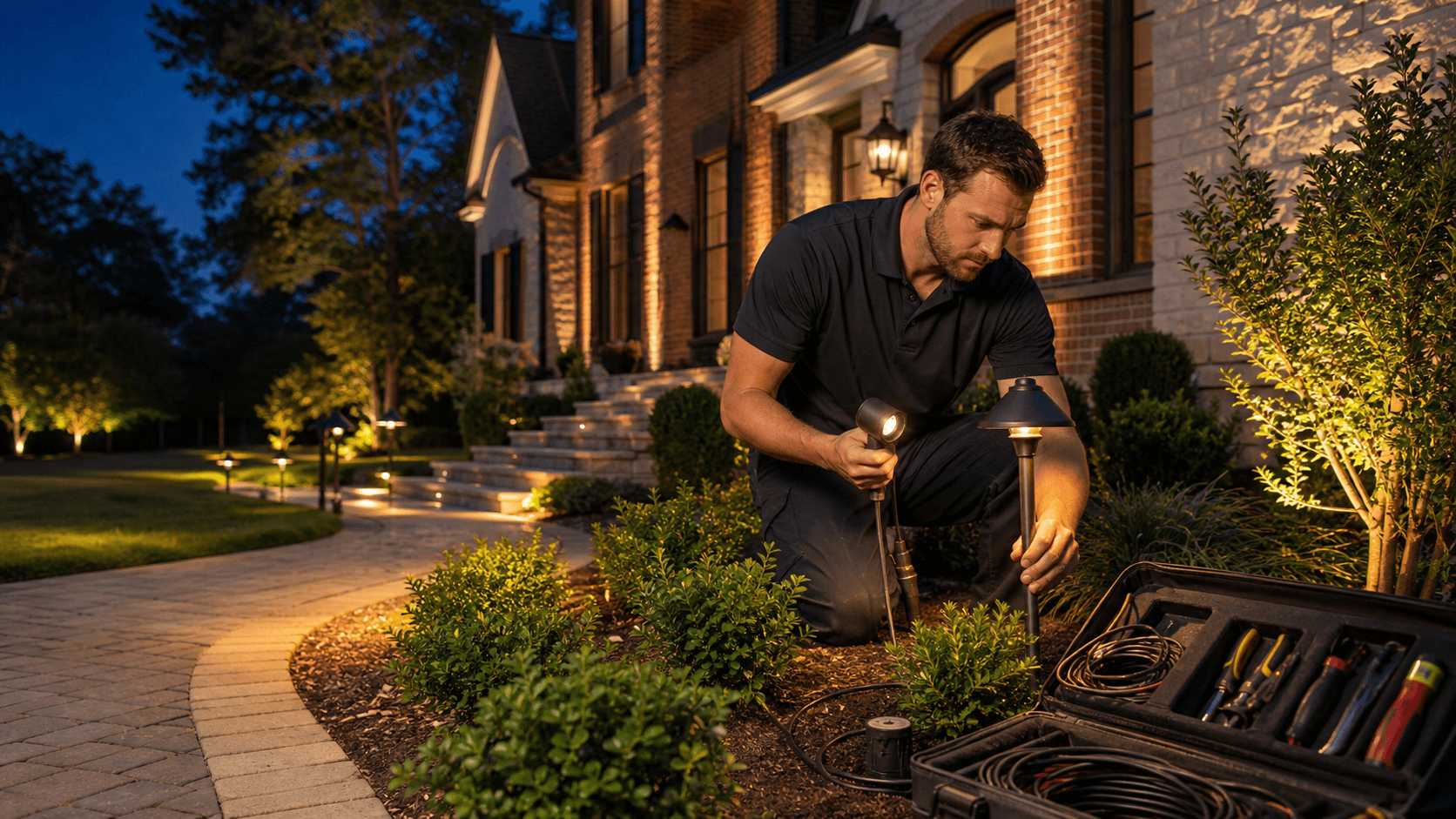
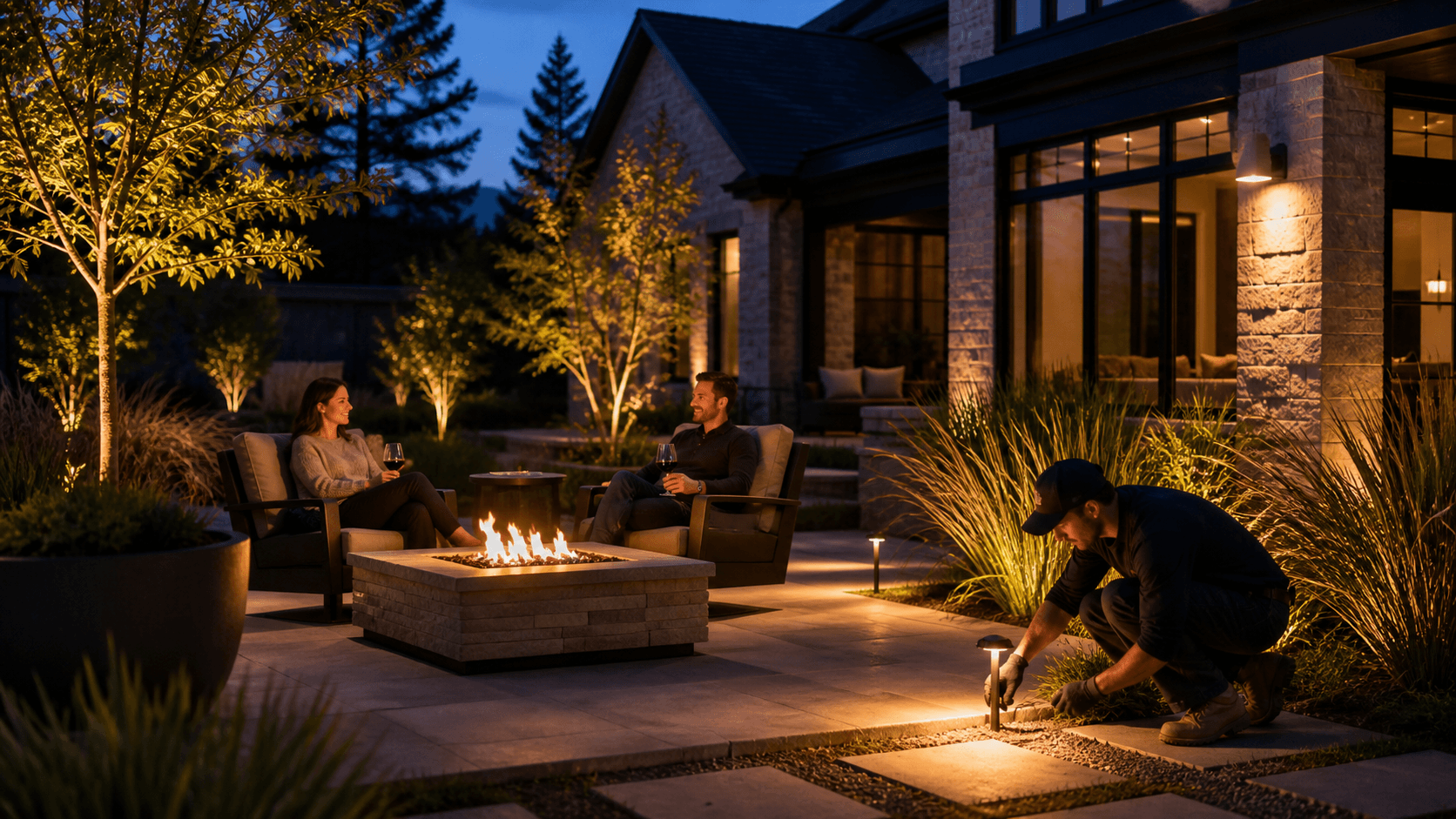
A patio added after the original system was installed may need its own soft lighting layer. LED lighting upgrades in Woodstock usually begin with a full system review, including fixtures, wire connections, transformers, and controls, rather than a bulb replacement alone.
How LED Lighting Improves Older Properties
LED fixtures use less electricity than many older lighting options and typically last longer. That means fewer bulb changes and a system that is easier to enjoy without constant attention.
Today's LEDs also offer a much better range of light color. Warm white light can give brick, stone, painted trim, and wood features a relaxed, natural look without the harsh bluish tone people may remember from early LED products.
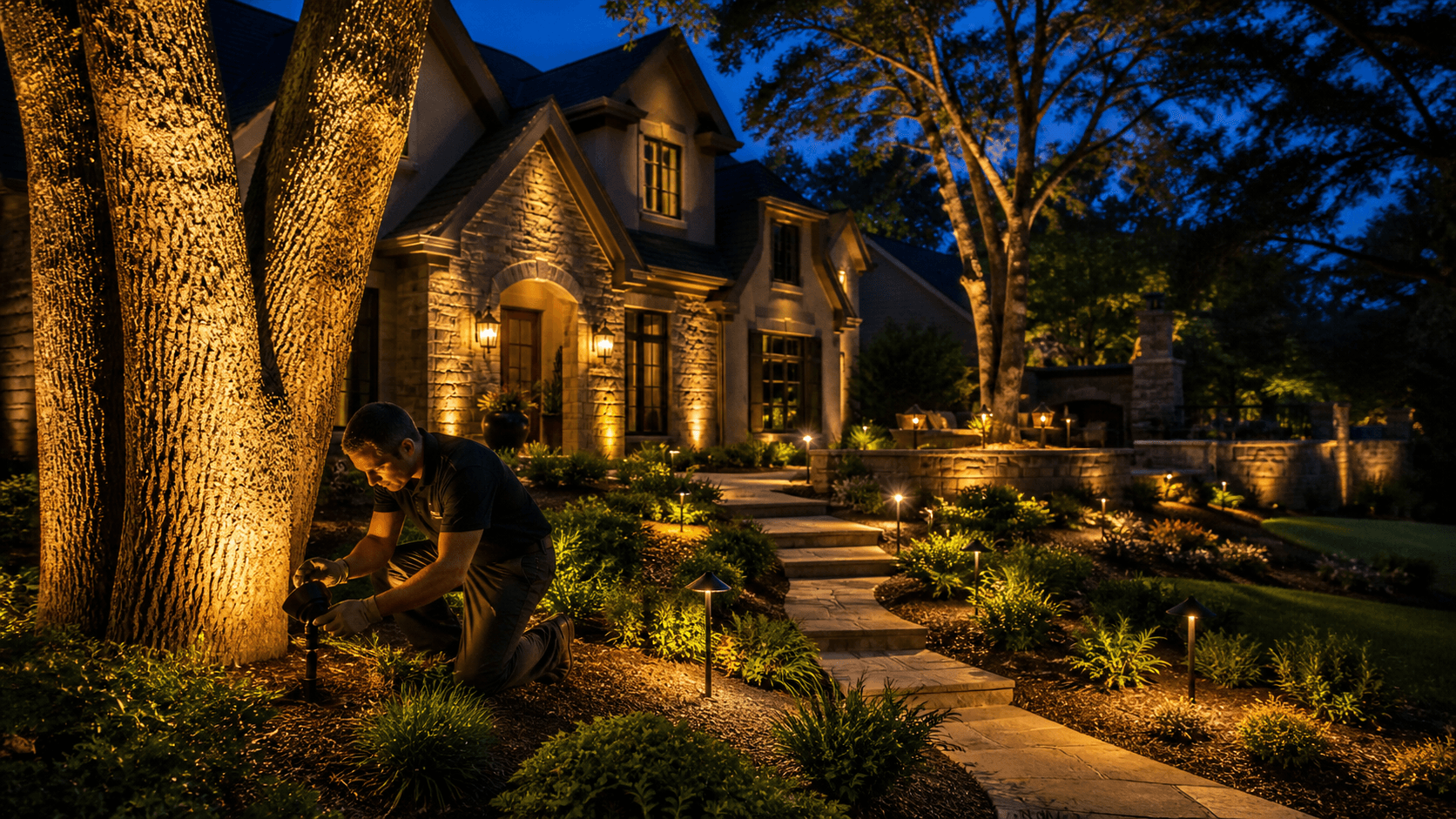
Careful fixture placement matters just as much as the fixture itself. We can direct light toward a stone façade, a large oak, a garden feature, or a front door while limiting glare near windows and neighboring homes. Precise beam control helps each feature stand out without flooding the whole yard with light.
For older properties, low-voltage outdoor lighting can be a practical update when an existing system is dated or unreliable. Metro Atlanta heat, humidity, rain, and storms can be tough on older connections. A custom LED plan accounts for your home's layout, exterior materials, plant growth, and the atmosphere you want after dark.
Design Choices That Respect Your Home's Character
The goal is not to make an older home look overly bright. We want the lighting to feel polished and inviting while allowing the original architecture to remain the focus.
A thoughtful design may include several gentle layers of light:
- Soft illumination at the front entry
- Low, purposeful lighting along paths and steps
- Uplighting for columns, trees, or masonry
- Downlighting from mature trees
- Accent lighting around porches, stonework, or garden features
Fixture finish and placement deserve attention, too. During the day, fixtures should blend naturally into the property. At night, they should provide useful light without becoming the first thing people notice.
Warm white lighting is often a strong fit for traditional, Craftsman-style, brick, and stone homes around Woodstock. Still, we choose color temperature based on the home's finishes and the feeling you prefer. Common mistakes include lining a walkway with too many fixtures, aiming lights into windows, mixing unrelated fixture styles, or choosing lamps bright enough to wash out texture and depth.
Controls and Components Built for Atlanta Weather
New fixtures are only part of a lasting upgrade. Dependable controls help your lighting operate when you need it, without nightly adjustments. Timers, photocells, and smart controls can turn lights on at dusk, adjust schedules as daylight changes, or create different settings for quiet evenings and outdoor gatherings.
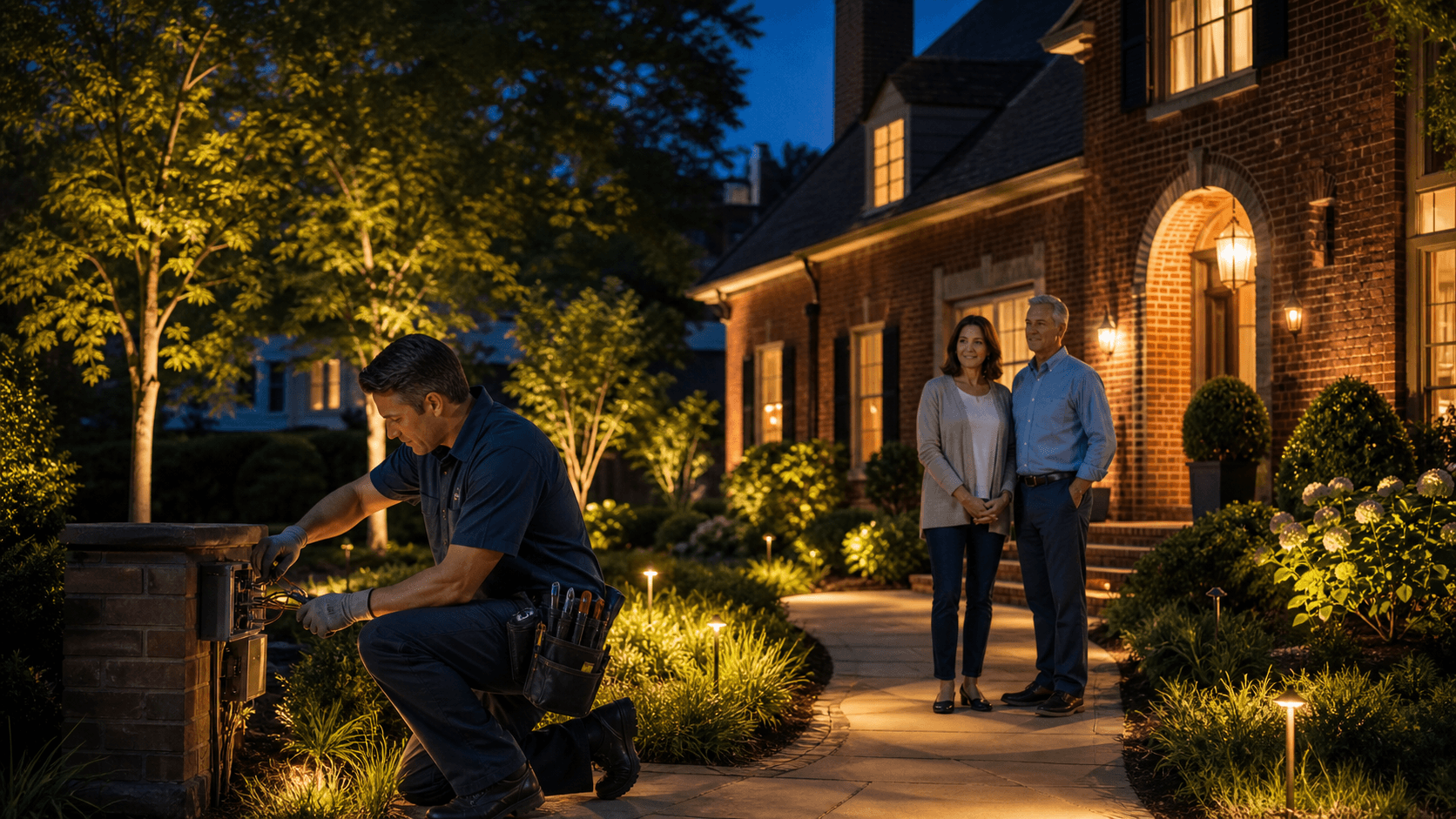
Behind the scenes, system components matter. Properly sized transformers, weather-resistant connections, quality wire, and durable fixtures support steady performance through rain, humidity, summer heat, leaf debris, and seasonal storms. Older properties may also have buried lines, limited transformer capacity, drainage concerns, or established plantings that require careful planning.
Early fall is a practical time to assess outdoor lighting because cooler evenings bring more time outside and earlier sunsets make dark spots easier to notice. Start by identifying what matters most, whether that is refreshing a dated entry, lighting mature trees, making a patio more comfortable, or replacing a system that no longer works reliably. A well-planned LED upgrade can make the home easier to enjoy after sunset while respecting the details that made it special in the first place.
Bring Out Your Home's Best Features After Dark
Brighten Up Lights can help you choose fixture placement, color temperature, and controls that suit your home's character and how you use your outdoor spaces. Learn how our LED lighting upgrades in Woodstock can improve your entry, pathways, patio, and landscape without unnecessary maintenance. For a professional recommendation and estimate, contact us to start planning a system that feels right for your property.