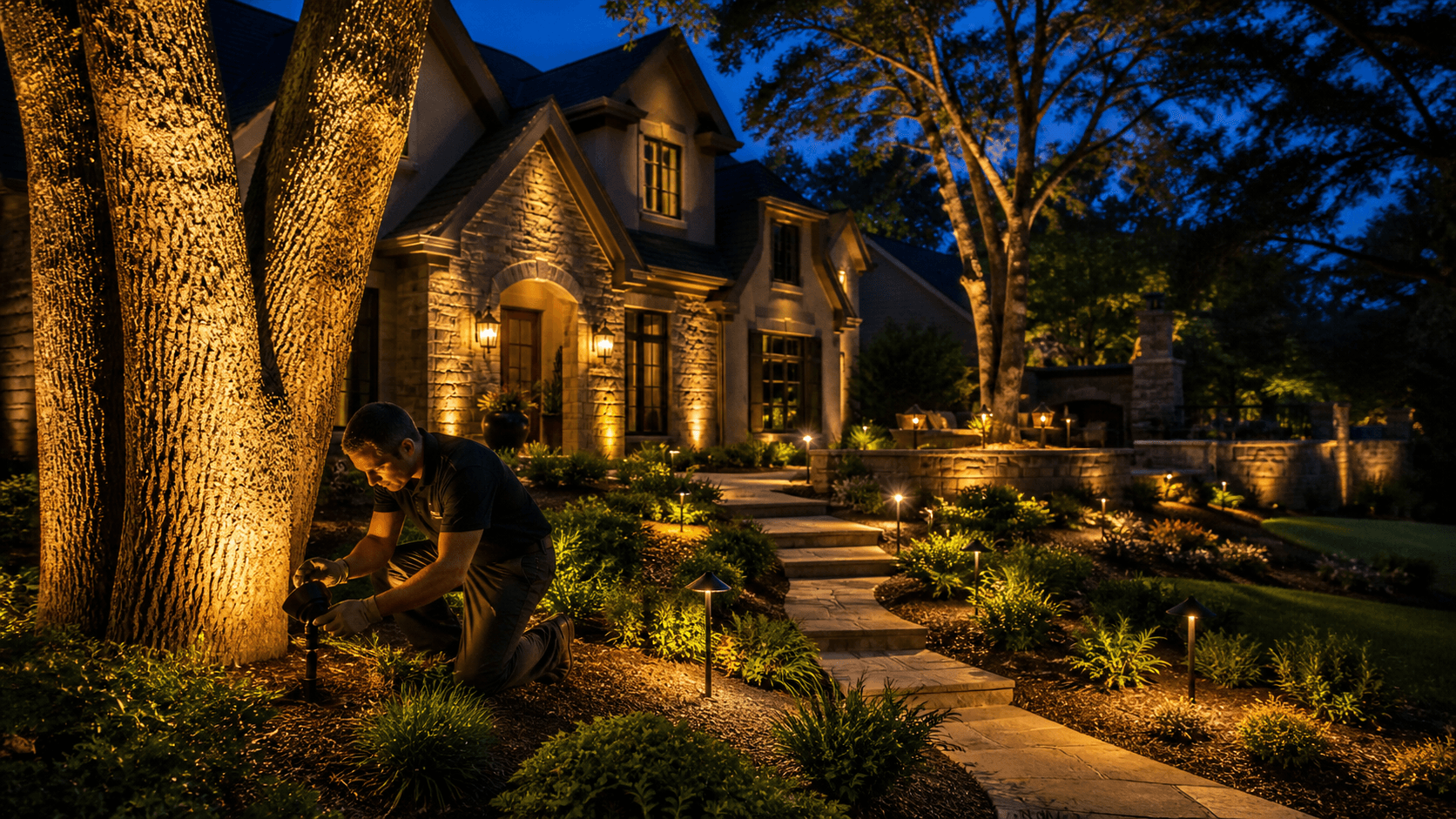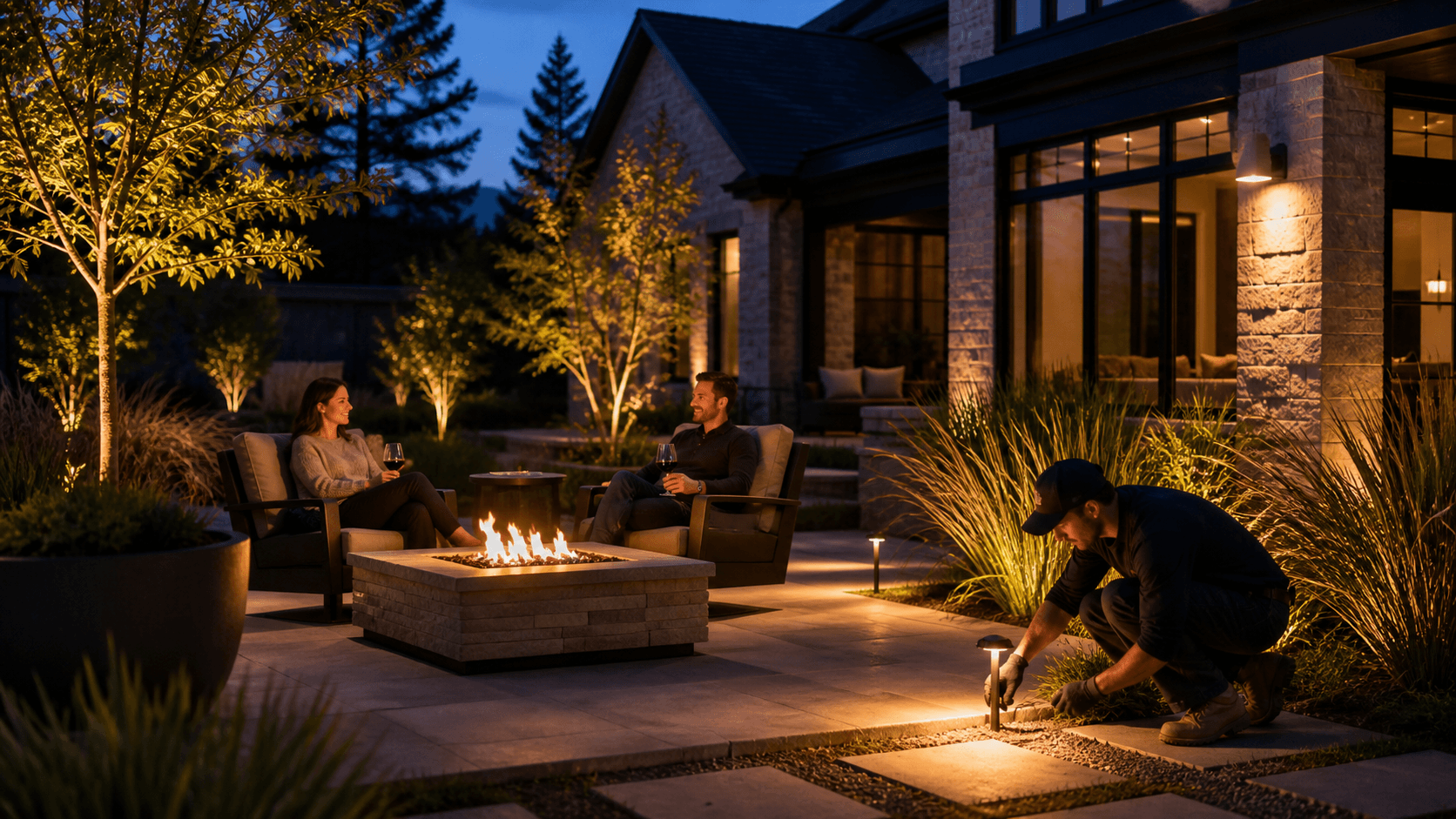
Poor Placement Can Make a Walkway Less Safe
Pathway lighting should help you move through your property with confidence after dark, not make each step harder to judge. During warm late-summer evenings in Woodstock, it is common to have guests walking between the driveway, front entry, patio, and backyard. A dim path, harsh glare, or poorly placed fixture can turn an easy walk into an uncomfortable one.
Placement problems are rarely obvious in daylight. A fixture may look fine beside a walkway, then create shadows, bright spots, or hidden hazards once the sun goes down. We look at fixture location, spacing, brightness, beam direction, and changing yard conditions so your lighting continues to work through rain, plant growth, fallen leaves, and earlier fall sunsets.
Glare and Dark Gaps Undermine Every Step
Glare happens when a light source is too exposed, too bright, or aimed toward a person's eyes. Instead of helping you see where you are going, that bright point makes your eyes adjust. The walkway beyond it can suddenly seem darker than it really is.
This issue often shows up near front doors, driveways, and patio steps. A fixture that shines straight across a path may look dramatic from one angle, but it can be uncomfortable for someone walking toward it. We aim for soft light that falls onto the walking surface rather than directly into people's line of sight.
Spacing matters just as much. Lights set too far apart can leave dark gaps where it is hard to notice cracks, roots, edging, or uneven pavers. On the other hand, fixtures packed closely together can make a path feel like a bright runway and pull attention away from the home.
A comfortable layout considers the full route, including:
- Turns in the walkway
- Changes in elevation
- Steps and driveway transitions
- Areas where people gather or cross through
- Planting beds that may block light over time
As pathway lighting installers in Woodstock, we do not treat every walkway as a straight line that needs fixtures at identical intervals. A well-planned design guides your eye and your feet naturally, while keeping the lighting calm for your family, guests, and neighbors.
Wrong Fixture Locations Create Real Safety Risks
A light fixture can become an obstacle when it sits too close to the edge of a path. Feet can bump it, pets can knock into it, and lawn equipment can strike it during regular yard care. This is especially common along narrow walkways or in spots where people tend to cut across a bed instead of following the full path.
Steps, slopes, uneven pavers, and driveway edges deserve extra care. These areas need lighting that makes a height change easy to see without putting a bright bulb at eye level. A fixture placed behind a step, too far off to one side, or at an awkward angle can create confusing shadows. Rather than showing the edge clearly, it may make the surface look flatter or deeper than it is.
Outdoor conditions also change throughout the year. Heavy rain can shift mulch, summer growth can cover a fixture, and leaf drop can block light from reaching the ground. Storm debris may also affect how a path looks after sunset. We plan for the way a yard will grow and change, not only the way it appears on installation day.
An Uneven Layout Can Diminish Curb Appeal
Pathway lighting does more than mark where to walk. It also shapes what people notice from the street and how your home feels after dark. Poorly placed fixtures can highlight bare mulch, utility equipment, or an empty corner of the yard that you would rather keep in the background.
Overly bright path lights can also compete with entry lighting, patio lighting, and accent lighting around trees or architectural details. Instead of creating a warm, layered look, the whole property can feel washed out. Soft path lighting should support the rest of the system, not become the main attraction.
Lining every walkway with matching fixtures at exact intervals is a common approach, but it does not fit every property. Symmetry can look good along a straight front walk. Curved paths, garden beds, porches, and side yards often need a more flexible layout.
We often place lights around key areas such as:
- A turn where the route changes direction
- The beginning or end of a path
- A step, slope, or change in material
- A front entry or patio transition
- A feature that helps orient guests after dark
As daylight shortens toward fall, a balanced system can help you use your outdoor spaces longer without making the property feel overlit. The goal is a welcoming nighttime appearance that feels intentional from every angle.
A Professional Plan Prevents Costly Corrections
Good pathway lighting starts with a nighttime plan, not just a fixture choice. Before selecting locations, we consider where people walk, where vehicles pull in, how guests approach the home, and which areas need gentle guidance instead of direct light. An on-site walk-through can also reveal tree roots, drainage areas, retaining walls, existing plantings, and other details that affect placement.
The behind-the-scenes parts matter too. Proper wiring, transformer sizing, fixture placement, and voltage management help the system provide consistent light across the property. Without a thoughtful plan, fixtures farther from the power source may appear dimmer than nearby lights. Poor planning can also lead to harder maintenance and changes after installation.
Before choosing a lighting design, it helps to ask how the system will handle future plant growth, whether fixtures can be adjusted, how maintenance will be handled, and whether the layout can expand later. Those questions keep the focus on a system that fits your property now and can adapt as your outdoor spaces change.
Get a Clearer Plan for Your Walkways
At Brighten Up Lights, we design custom residential outdoor lighting for properties in Woodstock and throughout the Metro Atlanta area. During a professional assessment, we consider walkways, entry points, planting areas, and outdoor living spaces to recommend fixture locations that match the way you use your property after dark.
Small placement mistakes can create glare, dark spots, misleading shadows, and visual clutter. A clear plan keeps light focused where it helps most, so every route feels easier to follow, safer to use, and more attractive from the street.
Get a Pathway Lighting Plan That Fits Your Property
Brighten Up Lights can assess your walkways, entry points, and landscape features to recommend a layout that supports safe, comfortable movement after dark. Our pathway lighting installers in Woodstock design systems with practical fixture placement, balanced illumination, and a polished appearance in mind. Contact us to request a professional lighting recommendation and estimate for your home.